Certificates of analysis (CoA)
On saleLOT #MK20261002
2 Oct 2026 · Janoshik
KLOW
Research blend of 4 peptides (KPV, GHK-Cu, BPC-157, TB-500) — 80 mg vial.

KLOW
80 mg · 142,90 €
They received their order
Photos sent by our customers when their parcel arrived.
Description
KLOW is a lyophilised research blend combining four peptides in a single 80 mg vial: GHK-Cu (50 mg), BPC-157 (10 mg), TB-500 (10 mg) and KPV (10 mg). It is used as a reagent to study combined pathways of tissue repair, inflammation modulation and dermatological mechanisms documented in vitro for each of its components. Supplied with an independent certificate of analysis. Intended exclusively for scientific research in the laboratory — not intended for human consumption.
Research peptides — Research Use Only
- Not for human consumption
- Not for the diagnosis, treatment or prevention of any disease
Related products


Reconstitution calculator
Pre-filled for this peptide. Adjust the water added and target dose to get the volume to draw.
Calculation result
Draw the syringe to
5
units
Volume
0.05
mL
Concentration
40
mg/mL
Draws / vial
40
Level on a graduated syringe 1 mL (100 U)
Syringe size
Target dose
the amount of peptide targeted
2 mg
2 mg = 2,000 mcg (µg)
Vial dosage
total peptide mass, in mg
80 mg
Bacteriostatic water
reconstitution volume, in mL
2 mL
KLOW — Research protocol
4-peptide blend (GHK-Cu/BPC-157/TB-500/KPV)
- Dose (study protocol)
- Blend — per component
- Frequency
- N/A (research)
- Duration (published studies)
- N/A
Source : Voir les composants (BPC-157, TB-500, GHK-Cu, KPV)
80 mg blend: GHK-Cu 50 + BPC-157 10 + TB-500 10 + KPV 10. No established human dosage.
This data comes from published studies compiled for informational purposes for laboratory professionals. No dose is recommended. Not intended for human consumption or animal use.
Read the full analysis KLOWGet your complete protocol
Personalised numeric summary + a printable step-by-step reconstitution procedure. We email it to you as a PDF.
How It Works
1. Concentration
Divide vial amount (mcg) by water volume (mL) to get concentration (mcg/mL).
2. Volume needed
Divide desired dose by concentration to get injection volume in mL.
3. Syringe units
Multiply mL × 100 to get U-100 syringe units (IU).
Example
- 5 mg vial + 2 mL water = 2.5 mg/mL
- Want 250 mcg (0.25 mg)?
- 0.25 ÷ 2.5 = 0.1 mL
- 0.1 mL = 10 units on a U-100 syringe
Research Use Only
This calculator is for research purposes only. Not medical advice.
Common Conversions
- 1 mg
- 1,000 mcg
- 500 mcg
- 0.5 mg
- 250 mcg
- 0.25 mg
- 100 mcg
- 0.1 mg
Syringe Units
- 0.3 mL syringe
- 30 units
- 0.5 mL syringe
- 50 units
- 1.0 mL syringe
- 100 units
Volumetric conversion tool for laboratory handling. Not any human or animal administration advice. Research use only.
Why this research peptide
4-peptide blend
Combines GHK-Cu, BPC-157, TB-500 and KPV in a single 80 mg lyophilised vial for combined research protocols.
Multiple pathways studied
Each component is documented in vitro for distinct pathways: repair, angiogenesis, inflammatory modulation and dermatological signalling.
Single reconstitution
One vial to reconstitute for the whole blend, useful to standardise experimental conditions.
Verified purity
HPLC + mass spectrometry analysis by an independent laboratory, certificate included with each batch.
Long-term storage
Lyophilised form stable up to 24 months at -20°C for prolonged laboratory storage.
Discreet logistics
Shipped from the EU, delivery within 1–2 days, tracking included and neutral packaging.
What is the KLOW blend?
KLOW is a research blend combining four peptides — GHK-Cu, BPC-157, TB-500 and KPV — in an 80 mg lyophilised vial (50/10/10/10 split). It is used as a reagent for the combined study of tissue-repair and inflammation-modulation pathways in laboratory models. Supplied with an independent certificate of analysis, intended exclusively for scientific research — not intended for human consumption.
Storage & handling
Product intended exclusively for scientific research in the laboratory. Keep in its original packaging until use.
Published research data (components)
The works below, indexed on PubMed, document the pharmacology of the blend's components. They are cited as scientific context and do not constitute a product claim.
- 1
Journal of Applied Physiology (2011) — PMID 21030672
In vitro data on the role of BPC-157 in cell migration and survival.
- 2
Gastroenterology (2008) — PMID 18061177
KPV inhibits activation of the NF-κB pathway in cellular and preclinical models.
Components and pathways studied
The items below summarise the mechanisms documented in vitro and in preclinical models for each component, for information only, with no intended human use.
GHK-Cu (50 mg)
Copper-binding tripeptide studied for the modulation of dermal fibroblasts and collagen pathways in vitro.
BPC-157 (10 mg)
Pentadecapeptide studied for angiogenesis and growth-factor modulation in research models.
TB-500 (10 mg)
Synthetic fragment inspired by thymosin β4, studied for cell migration and tissue repair.
KPV (10 mg)
C-terminal tripeptide of α-MSH, documented in vitro for modulation of the NF-κB pathway.
Questions about this product
Who is this product intended for?
Is the product intended for human consumption?
How are batches verified?
What are the delivery times?
What payment methods are accepted?
How should a lyophilised peptide be stored?
Is the certificate of analysis provided?
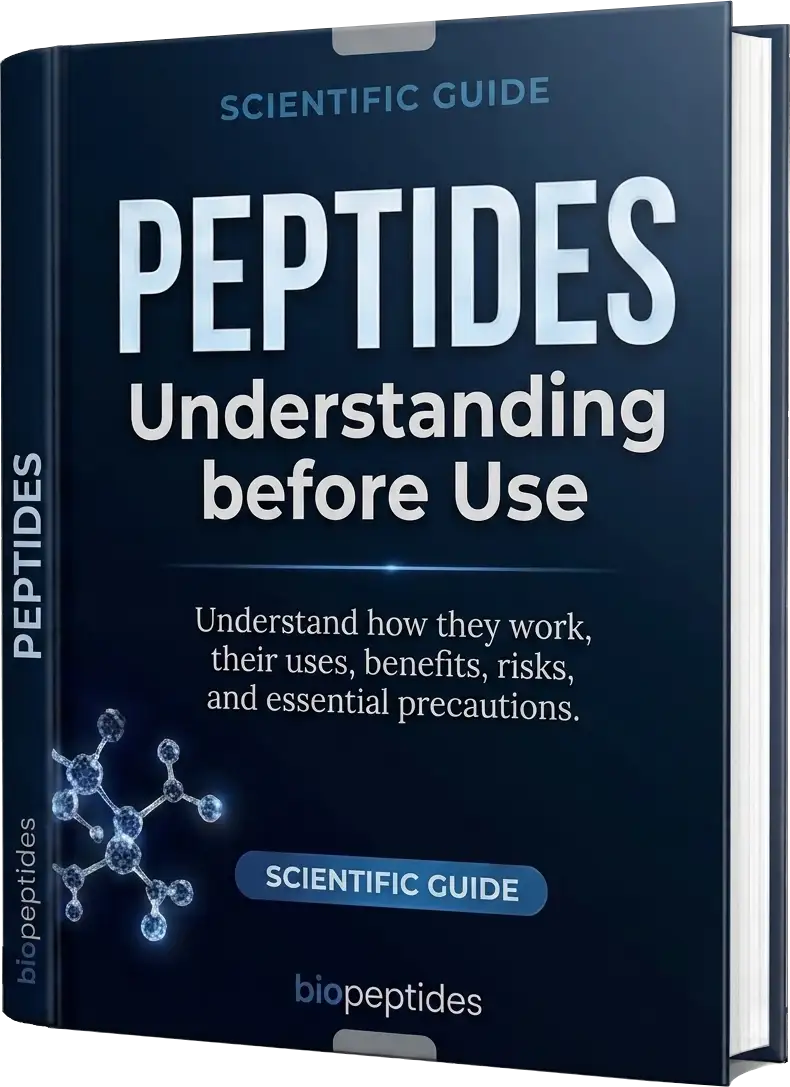
PEPTIDESunderstanding before use
The clear, source-backed guide to understanding how they work, their uses, their benefits, their risks and the essential precautions — before you get started.
- How peptides really work
- Their uses and what the research says
- Reported benefits vs marketing promises
- Risks, limits and essential precautions